Honda ZR-V India 2026 — Premium Hybrid SUV Launched at ₹40-50 Lakh, Is It Worth It?
Honda ZR-V India 2026 — Premium Hybrid SUV Launched at ₹40-50 Lakh, Is It Worth It?
Honda India has been playing it safe for too long. The City, Amaze, and Elevate are all solid, sensible cars — but none of them make a statement. None of them say Honda is serious about the premium segment. The ZR-V changes that.
Honda Cars India officially launched the Honda ZR-V on May 22, 2026, alongside the City facelift. The ZR-V arrives as a fully imported CBU model, serving as Honda’s flagship SUV and a brand-builder for the Japanese automaker in the Indian market. CarWale
Expected to be priced between ₹40 lakh and ₹50 lakh ex-showroom, the ZR-V targets premium 5-seater SUVs like the Volkswagen Tiguan and Skoda Kodiaq. CarWale
This is Honda declaring its intentions in the Indian premium segment clearly. The question is whether the ZR-V delivers the right package for the price.
What Makes the ZR-V Different From Every Other Honda in India
The ZR-V is not just another Honda. It represents a fundamentally different approach from the City and Elevate — it is a genuine halo product designed to elevate the brand image rather than chase volume.
The ZR-V marks a shift in Honda’s strategy, bringing in halo models to strengthen brand perception alongside its mass-market offerings. This suggests Honda is looking beyond volume and focusing on premium positioning. CarDekho
The car arrives as a CBU — fully assembled and imported, not locally manufactured. This means higher import duties push the price up but also means Indian buyers get the full global-spec ZR-V with no compromises for localisation.
Engine and Hybrid Technology — The ZR-V’s Strongest Argument
The powertrain is where the Honda ZR-V genuinely impresses and separates itself from all competitors at this price.
The ZR-V uses Honda’s e:HEV system — a 2.0-litre naturally aspirated petrol engine running on the Atkinson cycle. In normal driving, this engine acts almost entirely as a generator, charging a battery that then powers a separate electric motor to drive the front wheels. Only at higher speeds does the petrol engine connect directly to the wheels through the e-CVT. The combined system output of 184 PS and 315 Nm feels more like an EV than a conventional hybrid in everyday use. The throttle response is crisp, pickup is instantaneous, and the whole experience is impressively refined. CarDekho
This e:HEV system is not the mild hybrid technology that Maruti uses in the Grand Vitara and Hyryder. It is a full series-parallel hybrid where the car runs primarily on electric power in city conditions — with the petrol engine acting as a generator. The driving experience feels genuinely electric in city traffic — smooth, silent, and effortlessly responsive.
That architecture is genuinely clever. Honda has been running versions of this two-motor hybrid system across its lineup, from the City Hybrid to the Elevate’s e:HEV variant. The ZR-V represents the fuller, more premium expression of that technology. CarDekho
Real-world fuel efficiency from the e:HEV system in comparable models — the City hybrid delivers 22 to 25 kmpl in city conditions. The ZR-V’s larger body will reduce this slightly but expect 18 to 22 kmpl in mixed city driving — genuinely impressive for a 4.5-metre premium SUV.
The system operates in three modes:
- EV Mode: Runs purely on battery at low speeds — completely silent
- Hybrid Mode: Engine generates electricity while motor drives wheels
- Engine Mode: Direct engine drive at higher highway speeds for maximum efficiency
Design — Subjective But Distinctive
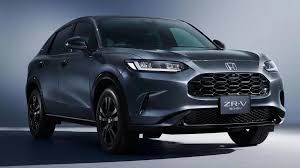
The Honda ZR-V has a more rounded crossover design compared to the boxier Honda Elevate. The front gets an octagonal grille, slim LED headlamps, L-shaped DRLs, and a clean lower grille. The bonnet has a slight slope. CarWale
Globally, the ZR-V measures around 4,568 mm in length, 1,840 mm in width, 1,620 mm in height, and 2,657 mm in wheelbase. CarWale
The design is genuinely subjective — and honesty requires acknowledging that not everyone will love it. The ZR-V’s design does not have the clean, cohesive premium look that the Kodiaq or Tayron pull off. It is a car that looks good in some angles and less cohesive in others. What it does have is distinctive character — 18-inch alloys, aerodynamic roof spoiler, and wraparound LED taillamps give it genuine road presence at a stoplight. CarDekho
The premium Bose audio branding, panoramic sunroof, and powered tailgate visible from the exterior all communicate the ZR-V’s premium positioning clearly.
Interior — Honda Quality Where It Matters
The Honda ZR-V cabin follows a clean and simple layout. Instead of a regular gear lever, it uses a button-based selector on the centre console. Key features include a floating touchscreen, fully digital instrument cluster, 3-spoke steering wheel, dual-zone climate control, powered driver seat, wireless charging, powered tailgate, and rear AC. CarWale
The button-based gear selector is a premium touch that Honda applies across its higher-end global models — it frees up console space and gives the cabin a cleaner, more contemporary look.
Honda has historically been brilliant at extracting usable space from modest dimensions. The ZR-V, at 4,570 mm in length, does not excel here. Boot space is just 380 litres with seats up, which is a surprisingly modest number. The rear seats, because the hybrid battery pack is mounted under the floor, sit somewhat lower — thigh support in the back is not great. With the panoramic sunroof fitted, headroom in the rear also takes a hit. CarDekho
This is the ZR-V’s most significant practical compromise — the hybrid battery under the rear floor affects both seat height and boot space. For a car at this price, 380 litres is genuinely below expectations. The Skoda Kodiaq and VW Tayron — which start at similar pricing — offer significantly more space and a more practical cabin layout.
Expected full feature list:
- Floating touchscreen infotainment
- Fully digital instrument cluster
- Wireless Android Auto and Apple CarPlay
- Wireless charging
- Dual-zone automatic climate control
- Powered driver seat
- Ventilated front seats
- Panoramic sunroof
- 12-speaker Bose audio system
- Powered tailgate
- 360-degree camera
- Honda Sensing Level 2 ADAS
- Heated leather steering wheel
- Multi-colour ambient lighting
Safety — Honda Sensing Does the Work
On the safety side, the ZR-V comes with Honda Sensing — the brand’s ADAS package including forward collision warning, automatic emergency braking, lane keep assist, adaptive cruise control, and traffic sign recognition. Along with this, it offers 6 airbags, hill hold assist, rear parking sensors, ABS with EBD, and 360-degree camera. CarWale
Honda Sensing is one of the most mature ADAS implementations available in the Indian market — the same system has been proven in the City hybrid and other Honda models globally. On Indian highways with clear lane markings, features like adaptive cruise control and lane keep assist genuinely reduce driver fatigue on long drives.
Price and Value — The Critical Question
The Honda ZR-V is priced between ₹40 lakh and ₹50 lakh ex-showroom. As it comes as a CBU import, this positions it in a niche premium space. CarWale
At ₹40 to ₹50 lakh, the ZR-V faces serious competition from cars that offer more for the money:
Skoda Kodiaq (₹39.99 lakh onwards): Larger 3-row SUV, turbocharged petrol, significantly more boot space, European platform.
Volkswagen Tayron (₹48.90 lakh onwards): 7-seater option, 2.0 TSI engine, more space.
Jeep Meridian (₹23.33 lakh to ₹37.82 lakh): Lower price, 7-seat option, international brand.
Toyota Innova HyCross (₹19.99 lakh to ₹30.99 lakh): Hybrid technology, 7 seats, Toyota reliability — at a significantly lower price.
The honest assessment: Against the Kodiaq or Tayron, the ZR-V gives you a genuinely impressive hybrid powertrain, strong quality feel inside, good safety kit, and Honda reliability. But they are not reasons that hold up at a price point where rivals give you more space, more seats, a turbocharged motor, and cleaner design. CarDekho
Who Should Buy the Honda ZR-V?
Buy it if:
- The e:HEV hybrid technology and fuel efficiency are your top priority
- You drive primarily in cities and want an SUV that feels electric in daily use
- Honda reliability and the Honda Sensing ADAS suite are important to you
- You want something different from the usual Kodiaq or Tiguan that everyone else in this segment drives
- Long-distance highway driving efficiency matters — the hybrid system is exceptional on highways
Do not buy it if:
- You need 7 seats — the ZR-V is 5-seat only
- Rear space and boot capacity are important — rivals offer significantly more at similar prices
- You want the most exciting driving experience — the e:HEV is smooth but not sporty
- Value for money is the primary consideration — the Kodiaq or Meridian offer more practical package per rupee
The Honest Verdict
The Honda ZR-V is genuinely impressive in one dimension — its hybrid powertrain. The e:HEV system delivers a driving experience that feels more like an EV than a petrol car, with fuel efficiency that no turbocharged petrol competitor can match.
But as a complete package at ₹40 to ₹50 lakh, the ZR-V has real compromises — limited boot space, modest rear seat accommodation, design that divides opinion, and a price that puts it in direct competition with significantly more spacious and practical alternatives.
If you specifically want Honda’s proven hybrid technology in a premium SUV body — the ZR-V is the answer in India. If you want the most practical premium SUV for the money — the Kodiaq or Tayron offer a stronger overall package.
The ZR-V is a niche product for a specific buyer. If you are that buyer, you will love it. If you are not, you will find better alternatives at similar prices.
Also read: Best Luxury Cars Under ₹50 Lakh India 2026 and Skoda Kodiaq vs VW Tayron India 2026.
External source: Honda India Official — ZR-V