Honda City 2026 Facelift vs Hyundai Verna — India’s Most Personal Sedan Rivalry Settled
Honda City 2026 Facelift vs Hyundai Verna — India’s Most Personal Sedan Rivalry Settled
This is not just a car comparison. This is a rivalry that has played out in Indian driveways, office parking lots, and family conversations for over two decades. The Honda City and Hyundai Verna have been chasing each other across generations, each refresh raising the bar for what a premium Indian sedan should be.
Now in May 2026, with Honda’s most comprehensive City update ever launching just days ago on May 22 — and the Verna having received its own significant updates — the rivalry is more interesting than it has ever been.
The 2026 Hyundai Verna clearly takes the lead when it comes to features, tech, and even performance, especially with its turbo-petrol engine. It feels like the more modern and well-equipped sedan, justifying its higher asking price for those who want the latest bells and whistles. On the other hand, the Honda City continues to play to its strengths with a refined driving experience, slightly better naturally aspirated performance, and a reputation for long-term reliability. CarWale
This is the most complete, most honest comparison of these two cars available anywhere — written the week the City facelift launched.
Price — Verna Starts Cheaper, City Facelift Offers More Variants
Honda City Facelift price starts at ₹12.19 lakh and Hyundai Verna price starts at ₹10.98 lakh ex-showroom. The Verna is cheaper at base level. Autocar India
There is a price difference of around ₹1 lakh for the entry-level variants. Top-spec variants of the Verna are more expensive by around ₹2.2 lakh. While many variants of both these sedans overlap in terms of pricing, it is the Verna that is the more expensive sedan at the top end. CarWale
Complete price ranges:
- Honda City 2026 Facelift: ₹12.19 lakh to approximately ₹19.00 lakh (petrol) | ₹19.99 lakh to ₹20.99 lakh (hybrid)
- Hyundai Verna: ₹10.98 lakh to ₹18.40 lakh
The Verna starts ₹1.21 lakh cheaper at base — meaningful for buyers at the lower end of the budget. The City facelift’s hybrid variant at ₹19.99 lakh is a genuinely unique proposition that the Verna cannot match with no hybrid option.
Important: Honda is currently offering significant discounts on the City to clear pre-facelift stock. If you find a pre-facelift City at a substantial discount — the value equation changes significantly. Always check for current offers before deciding.
What’s New in the Honda City 2026 Facelift — The Key Updates
Since the City facelift launched just 3 days ago, understanding exactly what changed is critical for any buyer comparing it to the Verna.
New exterior: Accord-inspired front design with a honeycomb grille, sharper LED headlamps with connected DRLs, repositioned Honda badge above the grille, new alloy wheel designs across variants, and revised rear bumper.
New interior features:
- 10.25-inch touchscreen — upgraded from 8 inches — a significant improvement
- Ventilated front seats — finally added after years of owners requesting this
- 360-degree surround view camera — new addition
- Updated Honda Sensing ADAS suite with additional functions
- New colour options including Obsidian Blue Pearl
What stays the same:
- 1.5-litre naturally aspirated petrol engine (121 PS, 145 Nm)
- CVT automatic gearbox
- Overall dimensions and wheelbase
- Honda’s proven reliability and build quality
The facelift specifically addresses the City’s three biggest weaknesses versus the Verna — screen size, ventilated seats, and camera coverage. This makes the comparison genuinely closer than it was before the update.
Engine and Performance — Verna’s Turbo vs City’s Refinement
This is where the two cars differ most significantly in character.
Honda City 2026: The 1.5-litre naturally aspirated engine producing 121 PS and 145 Nm is Honda’s proven i-VTEC unit. It is not turbocharged — which means no sudden surge of mid-range power, but also no turbo lag and a linear, predictable power delivery that feels refined at all speeds.
At highway speeds, the City’s engine is one of the smoothest available in any Indian sedan — the refinement level is genuinely impressive. The CVT automatic pairing is the benchmark for smooth, seamless acceleration. You never feel a gear change. Power arrives continuously and linearly.
Real-world petrol mileage: 15 to 17 kmpl city, 18 to 20 kmpl highway.
City Hybrid e:HEV: The hybrid variant at ₹19.99 lakh uses Honda’s full series-parallel hybrid system — the same technology as in the globally acclaimed Honda HR-V and Jazz hybrid. Real-world city mileage of 22 to 25 kmpl makes it the most fuel-efficient sedan available in India at any price. In city traffic, the engine frequently shuts off and the car runs silently on electric power alone.
Hyundai Verna: The Verna offers two petrol options that create genuinely different ownership experiences.
The 1.5-litre naturally aspirated engine producing 113 PS with IVT automatic is smooth and refined — comparable to the City’s character though slightly less polished in refinement.
The 1.5-litre turbo petrol producing 157 PS and 253 Nm with 7-speed DCT is where the Verna separates itself dramatically. 157 PS in a compact sedan is genuinely quick — the 0 to 100 kmph time of approximately 8.5 seconds makes it faster than most budget performance cars. The DCT’s sharp gear changes in Sport mode create an engaging driving experience that the naturally aspirated City simply cannot replicate.
The Verna also delivers good efficiency, but its turbo variant may vary depending on driving style. Aggressive driving with the turbo DCT can reduce real-world mileage to 12 to 13 kmpl in city conditions. Relaxed driving returns 15 to 16 kmpl. ZigWheels
Engine verdict: City for refinement, smoothness, and efficiency — particularly the hybrid. Verna turbo DCT for performance and driving engagement.
Design — Facelift City vs Refreshed Verna
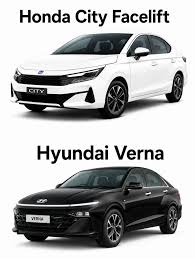
Honda City 2026 Facelift: The Accord-inspired front design gives the City a noticeably more premium and sophisticated appearance than its predecessor. The cleaner horizontal grille, the sharper headlamps, and the subtly revised proportions create a face that looks genuinely upmarket.
The side profile remains unchanged — and the City’s proportions remain arguably the best of any sedan in its class. Clean, well-balanced, and premium without ostentation. The facelift adds new alloy designs that freshen the overall appearance.
The City’s design strength has always been restraint. It does not shout. It does not try too hard. And in doing so, it looks more expensive than most cars in this segment.
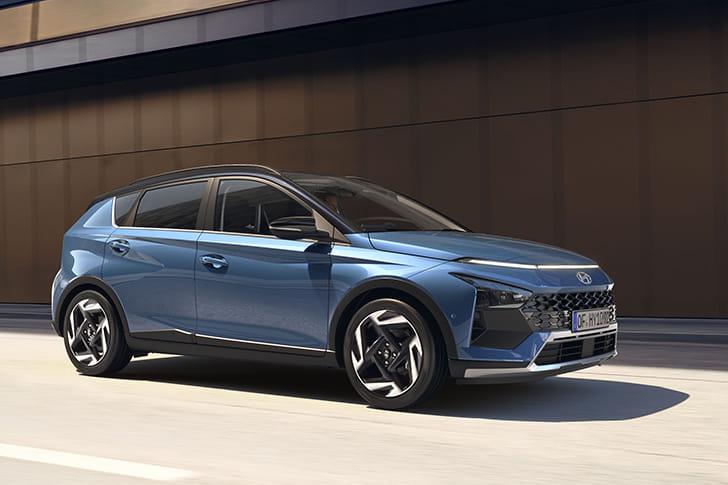
Hyundai Verna: The Verna carries strong brand legacy and a reputation for reliability. The Verna’s design is more dramatic and expressive — the sharp front lighting, the sporty roofline, and the connected LED taillamps create a car that looks exciting from multiple angles. CarWale
The dual 10.25-inch screen setup visible through the windshield and the panoramic sunroof on higher variants give the Verna’s interior a distinctly premium, almost luxury car ambiance that is genuinely impressive at this price.
Design verdict: City for mature, restrained elegance. Verna for dramatic, youthful excitement. Both are genuinely well-designed — this choice is personal.
Features — Verna Still Leads, City Facelift Closes the Gap
The City facelift’s new 10.25-inch screen, ventilated seats, and 360-degree camera directly address the three areas where the Verna most clearly led the previous City.
Honda City 2026 Facelift top variant features:
- 10.25-inch touchscreen — upgraded and now competitive
- Honda Sensing Level 2 ADAS — Adaptive Cruise Control, Lane Keep Assist, Autonomous Emergency Braking, Lane Watch Camera
- 360-degree surround view camera — new addition
- Ventilated front seats — new addition
- Electric sunroof
- Wireless Android Auto and Apple CarPlay
- Wireless charging
- Honda Connect connected car technology
- 6 airbags
- Ambient lighting
Hyundai Verna top variant features:
- Dual 10.25-inch screens — infotainment and digital cluster in one seamless display
- Bose 8-speaker audio system
- Ventilated and heated seats — front and rear
- 528-litre boot — largest in the segment
- Level 2 ADAS suite
- Wireless charging
- 6-speaker audio (standard) / Bose (top)
- Sunroof
- BlueLink connected car technology
- Ambient lighting with 64 colour options
What the Verna still has that the City does not:
- Rear ventilated seats — City only offers front ventilated seats
- Bose audio system on top variants
- Larger 528-litre boot versus City’s 506 litres
- More dramatic dual-screen setup
- Heated seats option
What the City has that the Verna does not:
- Honda Sensing ADAS — Adaptive Cruise Control is notably more mature and well-calibrated than Verna’s equivalent
- Lane Watch Camera — passenger-side blind spot camera that activates on indicator
- Hybrid variant — 27+ kmpl efficiency option not available in Verna
- Honda’s more refined CVT automatic
- Better cabin NVH insulation at highway speeds
Features verdict: Verna still leads on feature list comprehensiveness. City facelift closes the gap significantly and leads on ADAS quality and the unique hybrid option.
Safety — Both Carry Strong Credentials
Honda City 2026: The City carries Honda’s comprehensive safety package — 6 airbags, Vehicle Stability Assist, ABS with EBD, Hill Start Assist, and the Honda Sensing ADAS suite on higher variants. The ADAS implementation is one of the most mature in the Indian market — the Lane Watch camera and the Adaptive Cruise Control have been proven across multiple years of Honda global products.
Hyundai Verna: The Verna carries a 5-star Global NCAP safety rating for adult occupant protection — independently certified crash protection. Six airbags, ABS, Electronic Stability Control, and Level 2 ADAS on higher variants. The turbo DCT variant’s quicker emergency response also benefits from the sharper braking performance of the more powerful engine.
Safety verdict: Both cars are genuinely safe. Verna’s 5-star GNCAP certification is independently verified. City’s Honda Sensing ADAS implementation is more mature and better calibrated. For passive safety — Verna. For active safety technology quality — City.
Ride and Driving Experience — The Most Important Difference
The Honda City has been a favourite of Indian sedan enthusiasts with its smooth ride quality, refined engines, and ample interior space. When it comes to highway cruising, the Honda City boasts a quiet cabin, high-seating comfort, and excellent engine performance for long distances. CarWale
The City’s ride quality is the benchmark in the sedan segment — particularly at highway speeds. The suspension absorbs road imperfections with composure. The cabin insulation from wind and road noise is better than the Verna — after 4 to 5 hours on the highway, City passengers arrive noticeably less fatigued.
The Verna turbo DCT is more engaging to drive — the turbo surge, the sharp DCT shifts, and the sporty character make spirited driving genuinely exciting. But this comes at the cost of some ride quality compromise and higher fuel consumption when driven enthusiastically.
Driving verdict: City for refinement, comfort, and long-distance relaxation. Verna turbo for driving engagement and performance.
After-Sales Service — Hyundai’s Advantage
Hyundai’s service network — over 1,300 authorised service centres across India — significantly exceeds Honda’s network of approximately 400 service points. For buyers in smaller cities and towns, this difference is a genuine practical consideration.
Honda service quality is excellent but availability outside major cities can be a challenge. Hyundai’s wider network means more accessible support, faster parts availability, and more competitive service pricing driven by dealer competition.
Service verdict: Hyundai wins clearly. Significant service network advantage.
Complete Head-to-Head Comparison
| Feature | Honda City Facelift | Hyundai Verna Turbo |
|---|---|---|
| Starting Price | ₹12.19L | ₹10.98L |
| Top Petrol Price | ~₹19.00L | ₹18.40L |
| Hybrid Option | Yes (₹19.99L) | No |
| Engine | 1.5L NA 121 PS | 1.5T 157 PS |
| Top Speed CVT/DCT | CVT smooth | DCT exciting |
| Boot Space | 506 L | 528 L |
| Dual Screen | No (single 10.25) | Yes |
| Rear Vent Seats | No | Yes |
| Bose Audio | No | Yes (top) |
| ADAS Quality | Excellent | Good |
| Cabin NVH | Better | Good |
| Service Network | 400+ | 1,300+ |
| Safety | Strong | 5-star GNCAP |
| Hybrid | Yes | No |
Who Should Buy the Honda City 2026 Facelift?
Buy the City if refinement, long-distance comfort, and cabin quality are the highest priorities. Buy the City if you value Honda’s reliability record and the ADAS technology quality over feature list length. Buy the City hybrid specifically if fuel efficiency is paramount — nothing else under ₹21 lakh comes close to 27 kmpl in city conditions. Buy it if you have a personal connection to the City nameplate — the facelift honours that heritage with the most comprehensive update in the car’s history.
Who Should Buy the Hyundai Verna?
Buy the Verna if features per rupee is the priority — the dual screen, Bose audio, rear ventilated seats, and 528-litre boot are genuinely hard to match. Buy the turbo DCT if driving engagement matters — 157 PS in a compact sedan is genuinely exciting. Buy it if Hyundai’s service network accessibility in your city is important. Buy it if the dramatic dual-screen interior appeals to your sense of what a premium sedan should feel like.
The Honest Final Verdict
The 2026 Hyundai Verna clearly takes the lead when it comes to features, tech, and performance, especially with its turbo-petrol engine. On the other hand, the Honda City continues to play to its strengths with a refined driving experience and a reputation for long-term reliability. CarWale
The City facelift has closed the gap significantly — the new 10.25-inch screen, ventilated seats, and 360-degree camera directly address the Verna’s previous advantages. But the Verna still leads on feature comprehensiveness, performance, rear seat ventilation, and Hyundai’s service network.
For most Indian buyers making a rational decision — the Verna offers more features at a slightly lower price. That is the practical answer.
But for buyers who have owned a City before, who value refinement over features, who want the hybrid efficiency option, or who simply love what the Honda City represents — the 2026 facelift is the best City ever made and deserves serious consideration.
The heart says City. The spec sheet says Verna. Know which one you are listening to — and the decision makes itself.
Rating: City 8.5/10 | Verna 8.5/10 — genuinely equal, genuinely different
Also read: Honda City 2026 Facelift Full Review and Best Cars Under ₹20 Lakh India 2026.
External source: Honda India Official — City