Tata Safari EV 2026 — India’s Most Anticipated 7-Seat Electric SUV
Tata Motors is about to do something genuinely exciting. The Tata Safari — one of India’s most beloved and most iconic SUV nameplates — is going electric. The Tata Safari EV is expected to launch in India in late June to July 2026 and it will be the most significant electric vehicle launch in India’s mainstream market since the original Nexon EV. Unlike the Sierra EV which targets lifestyle buyers — the Safari EV targets practical Indian families who need genuine 7-seat capability, strong real-world range, and the trusted Tata brand behind their electric vehicle purchase. Expected price is ₹25 to ₹35 lakh — here is everything you need to know.
Why the Safari EV Matters
The Tata Safari has been one of India’s most consistently successful premium SUVs since its relaunch in 2021. It combines a commanding road presence, genuine 7-seat practicality, strong Tata build quality, and a price that makes it accessible to serious family SUV buyers without crossing into luxury territory.
Taking the Safari electric is Tata’s most ambitious mainstream EV move yet. Until now India’s electric SUVs have been primarily 5-seat products — the Nexon EV, Punch EV, Curvv EV, and Harrier EV. The Safari EV brings genuine 7-seat electric capability to India for the first time at a mainstream price — a segment where no serious competitor currently exists.
For Indian families who have been waiting for an electric SUV that genuinely replaces a conventional 7-seat family vehicle — the Safari EV is the product they have been waiting for.
Design — Safari DNA Goes Electric
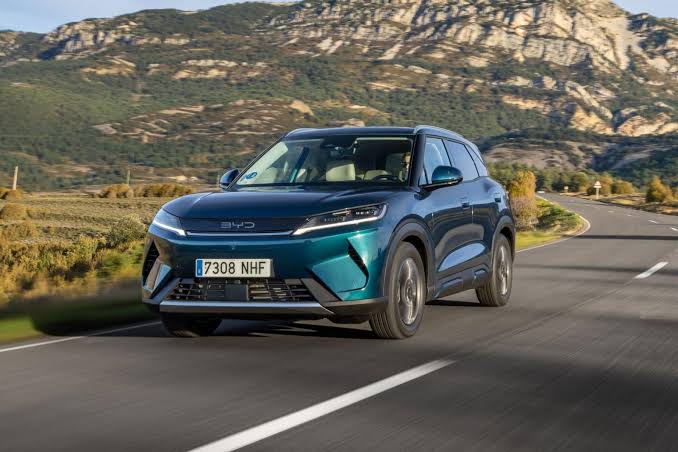
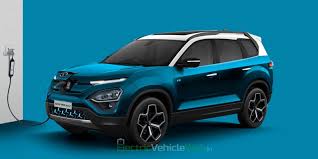
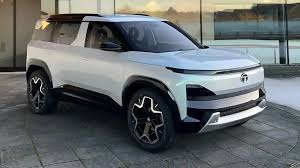
The Tata Safari EV retains the iconic Safari silhouette — the commanding upright stance, strong shoulder lines, and muscular proportions that have made the Safari one of India’s most recognisable premium SUVs. However EV-specific design updates give it a distinctly modern and forward-looking character.
Expected exterior highlights:
- Closed off front fascia — no conventional grille
- New parametric LED headlamp design — more sophisticated than petrol Safari
- Full width LED DRL strip across the front
- EV-specific blue accent detailing throughout
- New 19-inch aerodynamic alloy wheels
- Safari’s signature floating roof design retained
- Revised rear with full width LED tail lamp strip
- Dedicated EV badging and colour options
- Available in new colour options including an exclusive electric blue
The Safari EV’s design communicates that this is a genuinely premium electric product — not just a petrol Safari with an electric motor bolted in. Tata has invested in making the Safari EV look distinctive and forward-looking while retaining the Safari’s established visual identity that Indian buyers know and trust.
Key dimensions:
| Specification | Details |
|---|---|
| Length | 4,661 mm |
| Width | 1,894 mm |
| Height | 1,786 mm |
| Wheelbase | 2,741 mm |
| Ground Clearance | 205 mm |
| Boot Space | 447 litres (5-seat mode) |
Interior — Premium and Spacious
The Safari EV’s interior takes the petrol Safari’s already strong cabin and upgrades it meaningfully with EV-specific technology and premium additions.
Key interior features:
- 12.3-inch touchscreen infotainment — larger than petrol Safari’s unit
- 12.3-inch digital instrument cluster with EV-specific displays
- Tata’s iRA connected car technology — updated for EV
- Wireless Apple CarPlay and Android Auto
- Wireless charging
- Panoramic sunroof — standard on higher variants
- Ventilated front seats
- Second row captain seats available — 6-seat configuration option
- Third row — genuine adult usable seating
- Ambient lighting
- JBL premium audio system
- Head-up display on top variants
- Level 2 ADAS suite
The third row deserves special mention — Tata has engineered the Safari EV’s battery packaging to preserve genuine third row space. The flat floor made possible by the electric platform actually improves interior space compared to the petrol Safari — particularly benefiting middle row passengers who no longer have a transmission tunnel to straddle.
Battery, Range and Performance
| Specification | Standard Range | Long Range | AWD |
|---|---|---|---|
| Battery | 60 kWh | 75 kWh | 75 kWh |
| ARAI Range | 400 km | 500 km | 450 km |
| Real World Range | ~300 km | ~375 km | ~340 km |
| Power | 170 PS | 228 PS | 340 PS combined |
| Torque | 260 Nm | 345 Nm | 540 Nm |
| 0-100 kmph | ~8.5 sec | ~7.2 sec | ~5.8 sec |
| Drivetrain | RWD | RWD | AWD |
The long range variant’s 500 km ARAI range — approximately 375 km real world — is the headline number and it is genuinely impressive for a 7-seat electric SUV at this price. For context the Hyundai Ioniq 6 delivers 614 km WLTP but is a 5-seat sedan costing ₹45 to ₹55 lakh. The Safari EV delivers 500 km ARAI from a 7-seat SUV at ₹25 to ₹35 lakh — that value proposition is extraordinary.
The AWD variant with 340 PS combined output and 540 Nm of torque is the performance flagship — 0 to 100 kmph in 5.8 seconds from a 7-seat family SUV is genuinely remarkable. The instant torque delivery of dual electric motors makes the AWD Safari EV feel dramatically quicker than any 7-seat petrol SUV at this price.
Charging
| Charging Method | Time |
|---|---|
| Standard 15-amp Home Socket | ~14 hours (75 kWh) |
| AC Fast Charger 11 kW | ~7.5 hours (75 kWh) |
| DC Fast Charger 50 kW | ~70 minutes (75 kWh) |
| DC Fast Charger 100 kW | ~40 minutes (75 kWh) |
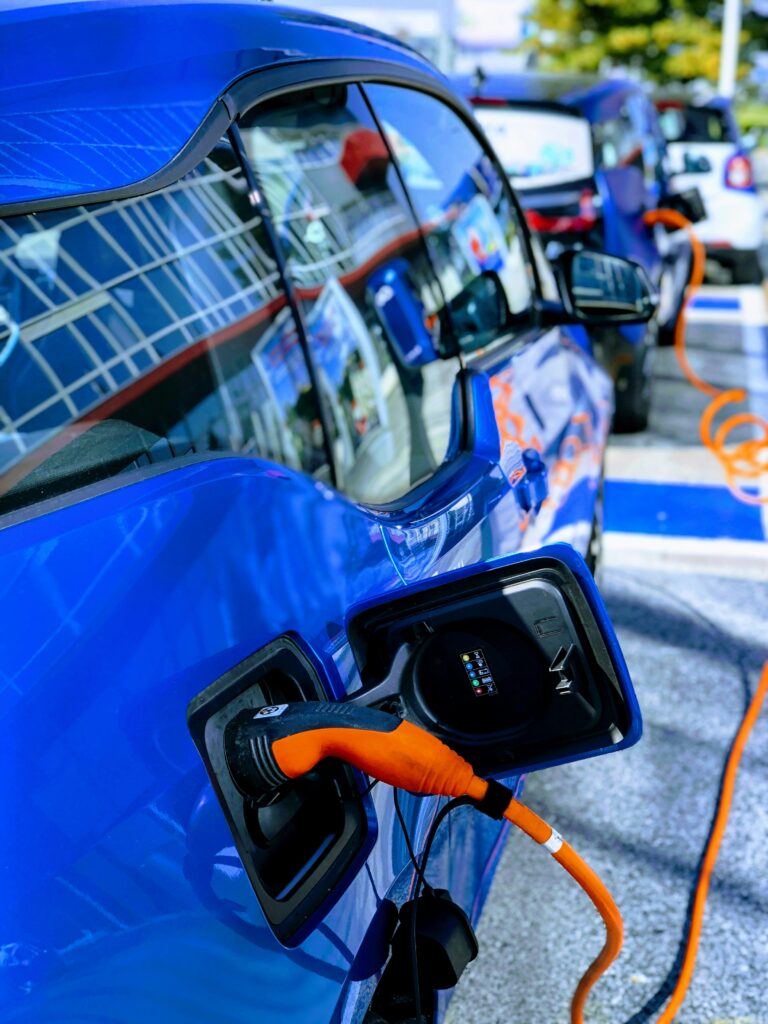
The Safari EV supports DC fast charging at up to 100 kW on the long range and AWD variants — delivering a meaningful charge in approximately 40 minutes. The 11 kW AC charging support means home charging overnight is completely practical — a full charge from near empty in approximately 7.5 hours.
Tata’s rapidly expanding Tata.ev charging network — now covering most Indian highways and major cities — gives Safari EV owners confidence that charging on long family road trips is increasingly accessible. The Kota to Jaipur highway for example now has multiple Tata.ev charging points making the 250 km journey completely practical in the Safari EV’s long range variant.
Safety — Tata’s Strongest Package
| Feature | Details |
|---|---|
| Global NCAP | Expected 5-star — Tata’s track record |
| Airbags | 6 standard — expected 7 on top variants |
| ADAS | Level 2 — full suite |
| ESC | Standard |
| Hill Descent Control | Standard |
| 360 Camera | Standard on higher variants |
The Safari EV is expected to receive independent crash testing — and given the petrol Safari’s strong safety performance and Tata’s consistent 5-star NCAP results across its EV lineup — a 5-star rating is a reasonable expectation. The electric platform’s low centre of gravity from the floor-mounted battery also inherently improves stability and rollover resistance compared to conventional SUVs.
Expected Price and Variants
| Variant | Expected Price |
|---|---|
| Standard Range RWD | ₹25.00 lakh – ₹27.00 lakh |
| Long Range RWD | ₹29.00 lakh – ₹32.00 lakh |
| Long Range AWD | ₹33.00 lakh – ₹35.00 lakh |
At ₹25 lakh for the base variant the Safari EV is priced to compete directly with the petrol Safari’s top variants — making the electric upgrade essentially cost-neutral for buyers who were already considering a premium Safari. The long range and AWD variants at ₹29 to ₹35 lakh compete in a segment where no direct 7-seat electric rival currently exists in India.
Tata Safari EV vs Key Rivals
| Parameter | Safari EV LR | Hyundai Creta Electric | MG ZS EV | Tata Harrier EV |
|---|---|---|---|---|
| Price | ₹29–32L | ₹17.99–23.99L | ₹18.98–23.99L | ₹21.49–26.44L |
| Seating | 7 | 5 | 5 | 5 |
| ARAI Range | 500 km | 473 km | 461 km | 500 km |
| AWD Option | Yes | Yes | No | Yes |
| Boot Space | 447 litres | 433 litres | 448 litres | 500 litres |
| Ground Clearance | 205 mm | 190 mm | 185 mm | 192 mm |
The Safari EV’s unique selling point against every rival here is its 7-seat capability — no other electric SUV at this price in India offers genuine third row seating. Combined with 500 km ARAI range, AWD option, 205 mm ground clearance, and Tata’s proven EV service infrastructure — the Safari EV has a genuinely differentiated value proposition that no current rival can match.
Who Should Buy the Tata Safari EV?
Buy the Safari EV if:
- You need 7 seats in an electric SUV — nothing else at this price offers this
- Range is important — 500 km ARAI long range covers most Indian family road trip needs
- AWD capability for varied Indian road conditions appeals
- Tata’s proven EV service network gives ownership confidence
- Budget is ₹25 to ₹35 lakh for a premium family electric SUV
Consider alternatives if:
- Budget is under ₹24 lakh — Tata Harrier EV or Hyundai Creta Electric offer strong value
- 5 seats are sufficient — Harrier EV and Creta Electric are more affordable
- Charging infrastructure in your area is still limited — range anxiety remains a concern
Motor Mogul’s Take
The Tata Safari EV is the electric vehicle I am most excited about for Indian families in 2026 — and I say that as someone whose family uses an Innova Crysta as our primary large family vehicle. The Innova Crysta’s reliability and third row comfort are genuinely exceptional — but the Safari EV’s 500 km range, instant torque AWD performance, and dramatically lower running costs make a compelling case for families considering their next large vehicle purchase.
In Rajasthan where large family road trips are a way of life — Kota to Jaisalmer, Kota to Jodhpur, Kota to Pushkar — the Safari EV’s 375 km real world range and Tata.ev charging network on major Rajasthan highways makes it increasingly practical. The ₹2 per kilometre running cost versus ₹8 to ₹10 per kilometre for the Innova Crysta diesel represents a saving of approximately ₹12,000 to ₹16,000 per month for a family covering 2,000 km monthly — extraordinary real-world economics.
The Safari EV is not for everyone yet — charging infrastructure in smaller Rajasthan towns remains limited and range anxiety on unfamiliar routes is a real concern. But for family buyers in major Rajasthan cities who are ready to make the electric transition in a genuinely practical 7-seat package — the Safari EV is the most compelling mainstream EV launching in India in 2026.
Final Verdict
The Tata Safari EV 2026 is India’s most important family electric vehicle launch — bringing genuine 7-seat capability, 500 km ARAI range, AWD performance, 205 mm ground clearance, and Tata’s proven EV infrastructure to the ₹25 to ₹35 lakh segment. No rival currently offers this combination. For Indian families who have been waiting for an electric SUV that genuinely replaces their conventional 7-seat vehicle — the Safari EV is the answer. Watch for the official launch in late June to July 2026 — this one changes the game for Indian family EV buyers.
External source:
ZigWheels — Tata Safari EV 2026 India Expected Price and Launch → https://www.zigwheels.com/upcoming-cars/tata-safari-ev
For related content visit: https://motormogul.in