How to Reduce Your Car Loan EMI in India 2026 — 8 Proven Strategies That Actually Work
How to Reduce Your Car Loan EMI in India 2026 — 8 Proven Strategies That Actually Work
Buying a car on a loan is the financial reality for the majority of Indian buyers. Research shows that almost seventy percent of car buyers in India use a loan instead of paying the full amount upfront. This means most Indian families are directly affected by EMI amounts. CarDekho
A car loan EMI is not just a monthly payment — it is a commitment that shapes your financial life for 3 to 7 years. Getting it wrong means years of financial stress. Getting it right means enjoying your car without the burden eating into your monthly budget.
The good news is that your EMI is not fixed in stone. Whether you are planning to take a car loan or already have one running, there are multiple proven strategies to reduce what you pay every month. This guide covers all of them — honestly and practically.
Understanding What Determines Your Car Loan EMI
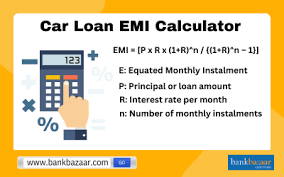
Before the strategies, understand the three factors that control your EMI:
Principal Amount — the total loan amount. Higher principal = higher EMI.
Interest Rate — the annual rate charged by the lender. The average car loan interest rate in India is between 8 percent to 12 percent. Even a one percent difference in interest rate can save you ₹50,000 to ₹1 lakh depending on your loan size and tenure. CarDekho
Loan Tenure — the repayment period. Longer tenure = lower EMI but higher total interest paid.
All three levers can be adjusted — either before taking the loan or after. Here is how.
Strategy 1 — Make the Largest Down Payment You Can Afford
This is the single most powerful thing you can do to reduce your EMI — and it must be done before the loan is sanctioned.
The easiest way to slash the amount of your EMI is also the most obvious one. Simply pay more at the beginning. The bigger down payment you make, the smaller the main amount you need to borrow. And this will immediately reflect in you having to pay less both your monthly instalment and the total interest over time. CarWale
Real numbers example:
- Car price: ₹10 lakh
- Down payment of ₹2 lakh → Loan of ₹8 lakh → EMI approximately ₹17,800/month (at 10% for 5 years)
- Down payment of ₹3 lakh → Loan of ₹7 lakh → EMI approximately ₹14,900/month
That ₹1 lakh extra in down payment saves you ₹2,900 every single month — ₹1,74,000 over 5 years. This is why financial planners always say: save more before buying a car.
Most lenders require a minimum 10 to 15 percent down payment. But paying 25 to 30 percent makes a dramatic difference to your monthly burden.
Strategy 2 — Negotiate the Interest Rate Aggressively
Interest rates on car loans are not fixed prices — they are negotiating points. Most buyers simply accept whatever rate the dealer’s finance partner offers without question.
How to get a better rate:
Improve your CIBIL score first. A good credit score above 750 will get you a better deal. Banks check your credit score through rating agencies like CIBIL before finalising the loan. If your score is below 700, spending 6 to 12 months improving it before applying can save you 1 to 2 percentage points on your interest rate — which on a ₹10 lakh loan translates to ₹50,000 to ₹1 lakh in savings. Ultraguardindia
Get quotes from multiple lenders. Never accept the first offer. Approach your bank, HDFC Bank, ICICI Bank, SBI, and NBFCs like Bajaj Finance simultaneously. Show competing offers and ask each lender to beat the best rate you have received. This simple step routinely saves 0.5 to 1 percent.
Use your existing banking relationship. Banks often offer lower car loan interest rates or special benefits to their existing customers as a way to promote brand loyalty. Having a good relationship with your bank can give you an advantage when negotiating for lower interest rates. CarDekho
Timing matters. Banks run special rate offers during festive seasons — Navratri, Diwali, and financial year-end (March). If your purchase can be timed around these periods, you can lock in rates that are 0.5 to 1 percent lower than standard.
Strategy 3 — Choose the Right Loan Tenure
Tenure selection is where most buyers make a mistake — choosing either too short (unmanageable EMI) or too long (excessive total interest).
A longer tenure gives you a smaller EMI, but the total interest you pay in the end becomes higher. A shorter tenure increases EMI but saves money on total interest. CarDekho
The practical approach:
Choose a tenure where the EMI is 15 to 20 percent of your monthly take-home income. This keeps the loan manageable without straining your budget. Then use prepayment (Strategy 4) to close the loan faster once your income grows.
Tenure comparison on ₹8 lakh loan at 9.5%:
- 3 years: EMI ₹25,600 | Total interest ₹1,21,600
- 4 years: EMI ₹20,100 | Total interest ₹1,64,800
- 5 years: EMI ₹16,800 | Total interest ₹2,08,000
- 7 years: EMI ₹13,200 | Total interest ₹3,08,800
The difference in EMI between 4 and 7 years is only ₹6,900 per month. But you pay ₹1,44,000 more in total interest over 7 years. Choose the shortest tenure your budget comfortably allows.
Strategy 4 — Make Partial Prepayments Whenever You Have Extra Money
This is the most powerful strategy for reducing the burden of an existing car loan.
Bonuses, tax refunds, freelance income — whenever there is extra money in your pocket, think about using it for a partial prepayment of your car loan. The difference will be most visible if you make the payment at the start of the loan because that is the time when interest makes up most of your monthly instalment. CarWale
How partial prepayment works:
When you make a prepayment, you have two options — either keep the EMI the same and reduce the tenure, or lower the EMI and keep the tenure as it is. The former helps you save more on interest payments. CarWale
Example: You have a ₹8 lakh car loan at 10% for 5 years. Your EMI is ₹17,000. After 1 year, you receive a bonus of ₹1 lakh and prepay it. Your remaining principal drops significantly, and if you choose to reduce the tenure rather than the EMI, you could close the loan 8 to 10 months earlier — saving approximately ₹30,000 to ₹40,000 in interest.
Important: Some banks in India charge a penalty fee for prepayment. This fee is usually 1 to 3 percent of the amount you pay early. So always check with your bank before making a prepayment. CarDekho
The RBI has banned prepayment penalties on floating rate loans but fixed-rate car loans — which are the majority — may still carry prepayment charges. Verify before prepaying.
Strategy 5 — Refinance to a Lower Interest Rate
If you took your car loan when interest rates were higher, or when your credit score was lower than it is now, refinancing can meaningfully reduce your EMI.
Your used car loan interest rate is not necessarily permanent. If your credit profile has improved since you took the loan, or if market rates have dropped, refinancing with a different lender can lower your EMI for the remaining tenure. Refinancing is most effective when the difference in interest rates is significant — generally around 1.5 to 2 percentage points or more. Anything less than that and the costs of processing and paperwork could offset your savings. CarWale
How to refinance:
Contact two or three banks or NBFCs with your current loan details and ask for a balance transfer quote. The new lender pays off your existing loan and gives you a new loan at the lower rate. You start paying the new, lower EMI immediately.
Car loan balance transfer is the process of transferring your loan from one bank to another bank which offers more flexibility and competitive rates. If you are paying a higher rate of interest than the market or do not have the flexibility to extend the tenure, you could move your loan to another bank. Ultraguardindia
Check before refinancing: Processing fees, balance transfer charges, and prepayment penalty on the existing loan. Ensure the total cost of switching does not exceed the interest savings.
Strategy 6 — Use the Step-Up EMI Option
Many lenders in India offer a step-up EMI structure — where your EMI starts lower and increases incrementally over the loan tenure as your income is expected to grow.
Step-up Option: Start with low EMIs that increase as your income grows. Team-BHP
This is particularly useful for young buyers or those early in their career who expect salary growth. You get the car now with an affordable initial EMI, and as your income grows, the EMI steps up proportionally without becoming a burden.
Discuss this option with your lender — not all banks offer it, but HDFC Bank, ICICI Bank, and several NBFCs do.
Strategy 7 — Increase EMI With Every Salary Hike
This is a discipline strategy that accelerates loan closure without feeling the pinch.
One of the fastest ways to reduce your EMI burden is to increase your repayment amount in tandem with a rise in your income. Try to increase your repayment amount, however small, each time you get a salary hike. Team-BHP
Here is a practical trick: if you pay a monthly EMI of ₹12,250, rounding it off to ₹13,000 means paying only an extra ₹750 per month. But your annual loan amount decreases by ₹9,000. Depending on how much more you can afford to pay, you can revise your monthly EMIs to pay your loan off faster. CarWale
Small increases compound significantly. An extra ₹1,000 per month on a 5-year loan can close it 4 to 6 months early, saving ₹20,000 to ₹35,000 in interest depending on your loan size.
Strategy 8 — Negotiate the Car Price Itself
This sounds obvious, but most buyers do not realise that negotiating the car’s purchase price directly reduces the loan amount and therefore the EMI.
The loan amount is directly proportional to the market value of the car. If you plan to get 75 percent of a car’s market value of ₹6 lakh and your loan is approved at 10 percent interest rate for a four-year tenure, your EMI will be around ₹11,413. However, if you are able to negotiate the price down to ₹5 lakh, keeping all other conditions the same, your EMI will be around ₹9,511. CarWale
Every ₹50,000 you negotiate off the car price reduces your loan by ₹50,000 and reduces your EMI by approximately ₹1,000 to ₹1,300 per month depending on tenure and rate. Over 5 years that is ₹60,000 to ₹78,000 in EMI savings from a single negotiation.
Negotiate hard on: Ex-showroom price, accessories package, extended warranty pricing, and insurance premium (your choice of insurer, not the dealer’s tie-up).
What NOT to Do — Common Mistakes That Hurt You
Choosing the longest tenure without prepayment intention: Extending to 7 years for a low EMI and then not prepaying means paying enormous total interest. Only choose a long tenure if you genuinely plan to prepay as income grows.
Accepting dealer-arranged finance without comparison: Dealers earn commissions on their finance tie-ups. Their preferred lender is rarely the cheapest. Always get independent bank quotes.
Ignoring processing fees in rate comparisons: A bank offering 8.5% with ₹15,000 in processing fees may cost more than one offering 9% with ₹5,000 in fees, depending on tenure. Calculate the total cost of the loan, not just the rate.
Missing EMI payments: Automate your payments. Set up standing instructions with your lender so EMIs are paid on time, which protects your credit score and avoids late fees. A missed payment hurts your CIBIL score and makes future borrowing more expensive. CarWale
The Bottom Line
Your car loan EMI is more controllable than most buyers realise. A combination of a larger down payment, a competitive interest rate, a reasonable tenure, and disciplined prepayment can save you ₹1 to ₹3 lakh over the life of a typical car loan in India — money that stays in your pocket rather than going to the bank.
Treat the financing decision with the same seriousness as the car selection decision. The car you choose matters. The loan terms you accept matter equally.
Also read: Complete Car Loan Guide India 2026 and Best Cars for Every Budget in India 2026.
External source: HDFC Bank — Car Loan Tips