Hyundai Inster 2026 — India’s Most Affordable Hyundai EV Launching This Month — Everything You Need to Know
Hyundai is about to do something it has never done before in India — launch an electric car under ₹15 lakh. The Hyundai Inster, expected to launch in India in June 2026 with a starting price around ₹12 lakh ex-showroom, is the Korean brand’s most significant EV launch for mainstream Indian buyers. Not the Creta Electric at ₹18 lakh. Not the Ioniq 5 at ₹46 lakh. A genuinely affordable, city-focused electric car that takes the fight directly to the Tata Punch EV on its own turf. Team-BHP
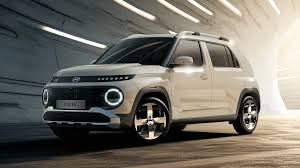
The Hyundai Inster is the smallest EV by Hyundai yet, and borrows design elements from the Ioniq 5 and the Casper. It gets multiple powertrain options and is feature-loaded with practical flexibility including an all-seat fold function. CarWale
If Hyundai gets the pricing right — and current indications suggest they will — the Inster could become the most significant affordable EV launch in India since the Tata Tiago EV.
Why the Inster Matters for India
The Inster fills a gap that has existed in Hyundai’s India EV lineup since the Creta Electric launched. The Creta Electric at ₹18 lakh is excellent but aspirational. The Inster at ₹12 lakh is accessible — the price point where the majority of Indian first-time EV buyers actually live.
The Inster is expected to be priced between ₹12 to 18 lakh depending on battery variant and features. It will compete with the Tata Punch EV and Citroen eC3. CarTrade
The Tata Punch EV currently dominates the affordable EV segment with no serious Korean competition. The Inster changes that — bringing Hyundai’s feature loading, BlueLink connected car technology, and the brand’s 1,300 plus service centres to a price point where Tata has operated virtually unchallenged.
Battery and Range — Two Options
The standard 42 kWh battery helps the motor produce 97 PS and the long-range 49 kWh battery model produces 115 PS. Torque remains constant for both variants at 147 Nm. Hyundai claims over 300 km range for the standard variant and a 355 km range on the WLTP cycle for the long-range Inster. CarWale
42 kWh Standard Battery: 97 PS, 147 Nm, 300 plus km claimed range. Real-world range estimate for Indian conditions: approximately 220 to 250 km. For city-focused buyers with home charging — this covers 3 to 4 days of typical urban commuting.
49 kWh Long Range Battery: 115 PS, 147 Nm, 355 km WLTP range. Real-world estimate: approximately 260 to 300 km in Indian conditions. The long-range variant makes the Inster a genuine inter-city capable EV for shorter highway runs.
Fast charging at 120 kW takes about 30 minutes to charge from 10 to 80 percent. Carchhe
120 kW DC fast charging on the Inster is significantly faster than the Tata Punch EV’s 25 kW fast charging. This is a genuine practical advantage on highway trips — a 30-minute charging stop versus a much longer wait on the Punch EV.
Design — Ioniq DNA in a Compact Package
The Inster’s design is unmistakably inspired by the Ioniq 5 — the pixelated LED lighting elements, the boxy proportions, and the overall character clearly communicate Hyundai’s premium EV design language in a compact body.
The Hyundai INSTER 2026 features compact dimensions that make it perfectly suited for narrow Indian city streets and tight parking spaces while offering SUV-inspired styling. CarBikeGPT
The compact dimensions are both the Inster’s greatest strength and its primary limitation. Easy to park in crowded Indian cities — genuinely easier than the Tata Punch EV which is already compact. The flip side is that interior space will require evaluation — particularly rear legroom for adult passengers.
The Inster Cross variant — an adventure-styled version with additional cladding and rugged exterior elements — is expected to come to India as well, giving buyers a choice between the standard urban-focused Inster and a more expressive design alternative.
Features — Hyundai’s Premium Loading at an Affordable Price
The Inster gets a 10.25-inch infotainment system with wireless Android Auto and Apple CarPlay, a 10.25-inch digital driver’s display, single pane sunroof, and ambient lighting. CarWale
Dual 10.25-inch screens — the same screen setup found in the Hyundai Creta — in a car expected at ₹12 lakh is genuinely impressive. Hyundai’s willingness to equip even its most affordable EV with premium technology is the brand’s clearest differentiator from budget-first rivals.
Features include a wireless phone charger, 64-colour ambient lighting, heated steering wheel and driver’s seat, a single-pane sunroof, and vehicle-to-load V2L support. Team-BHP
Vehicle-to-Load at this price is extraordinary. V2L — which allows the Inster’s battery to power external devices and appliances — was previously only available in the Hyundai Creta Electric and Ioniq 5. Having it in a ₹12 lakh car means you can power a fan, charge laptops, or run small appliances from your car’s battery. In Indian cities where power cuts are common — this is a genuinely useful real-world feature.
The all-seat fold function creates a genuinely flat load floor when all seats are folded — transforming the compact Inster into a surprisingly practical cargo carrier for weekend trips and moves.
Safety
Safety features include 6 airbags, ABS with EBD, 360-degree camera with parking sensors, and an ADAS suite including lane keep assist, adaptive cruise control, and automatic emergency braking. However, the India-spec Inster might not come with all ADAS features. CarWale
6 airbags standard and a 360-degree camera in a car at this price range is strong. The question mark on ADAS for the India-spec version is worth monitoring — Hyundai may remove some ADAS features to achieve the target price. Verify the final India-spec safety equipment when official specifications are announced at launch.
Hyundai Inster vs Tata Punch EV — The Key Comparison
This is the comparison every Inster buyer will make. The Punch EV currently leads the affordable EV segment — the Inster is the first genuine challenger.
| Feature | Hyundai Inster LR | Tata Punch EV LR |
|---|---|---|
| Expected Price | ~₹14 to ₹15L | ₹12.49L |
| Range ARAI | ~330 to 355 km | 421 km |
| Fast Charging | 120 kW | 25 kW |
| Screen | Dual 10.25-inch | 10.25-inch single |
| V2L | Yes | No |
| Sunroof | Yes | Yes |
| Service Network | 1,300+ | Good |
| Safety NCAP | Expected strong | 5-star BNCAP |
Punch EV wins on: Claimed range, established safety certification, lower price, higher ground clearance Inster wins on:Fast charging speed, dual screens, V2L feature, Hyundai service network, premium feature loading
What India-Spec Will Look Like
The global Inster will likely be modified for Indian conditions before launch:
Expected India-specific changes:
- Increased ground clearance — global spec is lower than ideal for Indian roads. Hyundai will need to raise this for Indian conditions
- India-tuned suspension — stiffer setup for rougher roads
- Possible removal of some ADAS features to achieve target pricing
- Local battery manufacturing — Hyundai is partnering with Indian battery suppliers to reduce costs
The ground clearance question is the most critical for Indian buyers — particularly those in cities with aggressive speed breakers or those who occasionally venture onto rougher roads.
Motor Mogul’s Take
The Hyundai Inster is the affordable EV we have been waiting for from Hyundai. The combination of 120 kW fast charging, dual 10.25-inch screens, V2L capability, 64-colour ambient lighting, and Hyundai’s 1,300 plus service network at an expected ₹12 to ₹15 lakh price point creates a genuinely compelling alternative to the Tata Punch EV. The Punch EV’s advantage is its proven 5-star BNCAP safety rating and Tata’s established EV track record in India. The Inster’s advantage is Hyundai’s superior fast charging, premium feature loading, and BlueLink connected car technology. For Rajasthan buyers specifically — the 120 kW fast charging makes the Inster significantly more highway-capable than the Punch EV for inter-city runs between Kota, Jaipur, and Jodhpur. Wait for the official India-spec announcement before booking — specifically verify ground clearance and final ADAS specification.
Should You Wait for the Inster or Buy the Punch EV Now?
Wait for the Inster if:
- Fast charging capability is important for your usage
- You specifically want Hyundai’s service network and BlueLink features
- V2L is a feature you would genuinely use
- The dual screen setup appeals to you
- Your purchase timeline extends to July to August 2026
Buy the Punch EV now if:
- Your purchase is urgent and cannot wait 1 to 2 months
- Ground clearance for rough roads is a priority
- The Punch EV’s proven 5-star safety rating is your top priority
- BaaS model’s lower entry cost suits your budget
Final Verdict
The Hyundai Inster 2026 is the most anticipated affordable EV launch in India this year. It arrives with the features, the fast charging capability, and the Hyundai brand backing to genuinely challenge the Tata Punch EV’s dominance of the affordable electric segment. Whether it delivers on its promise depends on the India-specific ground clearance, final ADAS specification, and exact pricing — all of which will be confirmed at launch.
Watch the June 2026 launch closely. This could be the most important affordable EV announcement of the year.
Also read: Tata Punch EV 2026 Review and Best Electric Cars Under ₹20 Lakh India 2026.
External source: Autocar India — Hyundai Inster