India Car Market 2026 — Record Sales, EV Revolution and What’s Coming Next
India’s automotive industry in
2026 is writing history. April
2026 recorded the highest ever
monthly passenger vehicle sales
in India’s history with 4,07,335
units — a 12.21 percent year
on year increase. Electric vehicle
sales grew 69.5 percent in the
first four months of 2026 with
79,063 electric cars sold. India
is no longer an emerging automotive
market — it is the world’s third
largest car market and growing
faster than any other major
economy. Here is the complete
picture of India’s automotive
revolution in 2026.
Record Breaking Numbers
India’s passenger vehicle market
set multiple records in FY2026.
Total passenger vehicle sales
exceeded 4.3 million units for
the full fiscal year — the
highest in India’s history.
February 2026 saw passenger
vehicle retail sales surge 44
percent year on year. April
2026 crossed 4 lakh units for
the first time ever in a single
month confirming India’s status
as a global automotive powerhouse.
The numbers reflect a fundamental
shift in Indian aspirations.
The average transaction price
of cars sold in India has risen
significantly as buyers upgrade
from entry level hatchbacks
to feature loaded compact SUVs.
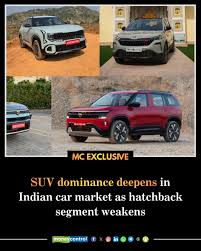
SUVs now account for over 55
percent of total passenger vehicle
sales — a remarkable transformation
from just a decade ago when
hatchbacks dominated.
The EV Revolution Is Real
India’s electric vehicle market
crossed 24.5 lakh total EV
units in FY2026 — a robust
25 percent year on year growth.
Electric passenger car sales
alone grew 84 percent year on
year to a record 1,99,590 units
in FY2026.
In early 2026 electric cars
now represent 5.8 percent of
total passenger vehicle sales —
up from 3.5 percent just two
years ago. The trajectory is
clear — India is on course for
the government’s target of 30
percent EV penetration by 2030.
Tata Motors leads India’s electric
passenger vehicle market with
over 36 percent market share
followed by Mahindra which
recorded a staggering 170 percent
growth year on year driven
by the success of its BE 6
XEV 9e and XEV 9S. JSW MG
Motor holds the second position
by volume with the Windsor EV
remaining India’s most popular
single electric model.
The Brands Winning India 2026
Maruti Suzuki continues to
dominate overall passenger
vehicle sales with approximately
41 percent market share. The
Dzire reclaimed India’s best
selling car crown in April 2026
with 23,580 units — proof that
sedans are not dead in India
when they offer genuine value.
Tata Motors has transformed
from a budget brand to India’s
most safety conscious and
technology forward mainstream
manufacturer. The Sierra Punch
Nexon and Harrier create a
lineup that spans every important
segment from ₹5.65 lakh to
₹30 lakh.
Mahindra’s renaissance is the
most dramatic story in Indian
automotive in recent years.
From the XUV700 to the Thar
Roxx to the INGLO platform
EVs Mahindra has consistently
delivered India’s most exciting
products across multiple segments
simultaneously.
Hyundai and Kia continue to
offer the most feature loaded
and technologically advanced
cars in their respective price
segments — the Creta and Seltos
remaining benchmarks that all
rivals measure themselves against.
Why SUVs Dominate
The shift to SUVs in India is
structural not cyclical. Better
roads have increased highway
driving enabling buyers to
appreciate the higher ground
clearance and better visibility
of SUVs. Growing aspirations
mean buyers want a car that
makes a statement — compact
SUVs deliver this at affordable
prices. Improving quality at
every price point means a
₹10 lakh SUV in 2026 offers
more features and safety than
a ₹20 lakh car did five years
ago.
The Charging Infrastructure Story
India’s public EV charging
network has expanded dramatically.
Over 25,000 public charging
points are now operational
across India — a threefold
increase in two years. Highway
charging corridors connecting
all major cities now ensure
that long distance EV travel
is practical for the first time.
Tata Power BPCL ChargeZone
and Ather Grid are the three
largest charging networks.
All major automotive OEMs
have committed to expanding
charging networks alongside
their EV product launches —
Mahindra’s Charge Zone Maruti’s
Suzuki Connect charging network
and Toyota’s dealer based
charging points are making
EV ownership accessible
outside metros for the first
time.
New Brands Disrupting The Market
2026 has seen the most competitive
new entrant activity in India’s
automotive history. Tesla launched
the Model Y bringing the world’s
most recognised EV brand to
India. VinFast arrived from
Vietnam and became the fourth
largest EV brand within months.
BYD expanded its lineup with
the Sealion 7. Mercedes launched
the CLA Electric. Skoda opened
bookings for the Kodiaq facelift.
The result is an Indian car
buyer who has never had better
choice across every segment
and budget. From the ₹5.65
lakh Tata Punch to the ₹67.89
lakh Tesla Model Y the Indian
market in 2026 caters to every
aspiration.
What’s Coming in the Second Half of 2026
The second half of 2026 promises
to be even more exciting. The
Tata Sierra EV and Safari EV
launch in May-June. The MG
Majestor challenges the Fortuner.
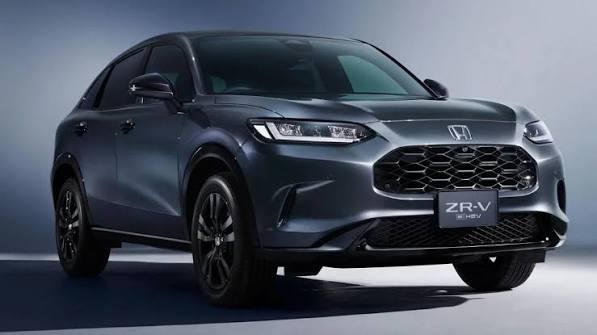
The Honda ZR-V brings Honda
back to the premium segment.
The Kia Syros EV arrives in
July. The Maruti Brezza facelift
and Fronx facelift are expected
by Diwali. The Toyota Fortuner
facelift with mild hybrid arrives
in June.
By the end of 2026 India will
have over 30 electric cars
available across price points
from ₹8 lakh to ₹70 lakh.
The charging network will have
expanded to over 40,000 public
points. EV penetration in
passenger vehicles is expected
to cross 8 percent for the
full calendar year.
The Road Ahead
India’s automotive market in
2030 will be fundamentally
different from today. Government
targets call for 30 percent
EV penetration across all
vehicle categories by 2030.
With current growth rates of
25 to 84 percent across different
EV segments that target is
achievable.
India is expected to overtake
Japan as the world’s third
largest car market in terms
of production by 2027. Multiple
global automakers have announced
India as a manufacturing hub
for right hand drive markets —
Suzuki Tata Hyundai Kia and
Volkswagen Group all producing
cars in India for export.
The Indian car buyer of 2026
is the most informed demanding
and aspiration driven in history.
They research every purchase
extensively comparing safety
ratings features fuel efficiency
and total cost of ownership
before deciding. Websites like
motormogul.in exist precisely
to serve this research hungry
Indian car buyer.
India’s automotive revolution
is not coming. It is already
here. And 2026 is its defining
year.