What is Flex Fuel? How Does It Work in India 2026
India just launched its first ever flex fuel car on June 4, 2026 — the Maruti WagonR Flex Fuel. Every news channel, every automotive website, and every WhatsApp group is suddenly talking about flex fuel. But most people have one simple question — what exactly is flex fuel and how does it actually work? If you have been reading about the Maruti WagonR Flex Fuel launch and finding the technical explanations confusing — this is the guide for you. We are going to explain flex fuel in the simplest possible way so that every Indian car buyer understands exactly what this technology means for them.
What is Flex Fuel — The Simple Explanation
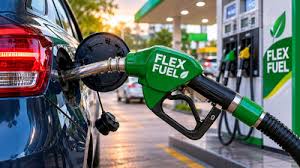
Flex fuel stands for flexible fuel. A flex fuel vehicle is a car that can run on more than one type of fuel — specifically petrol, ethanol, or any mixture of both in any proportion.
Think of it this way. Your current petrol car can only drink one thing — petrol. If you accidentally put diesel in it the engine stops working. A flex fuel car is different — it can drink petrol, ethanol, or a cocktail of both in any ratio and keep running perfectly. The engine automatically figures out what fuel is in the tank and adjusts itself accordingly.
This flexibility is the entire point of the technology — hence the name flex fuel.
What is Ethanol?
Ethanol is a type of alcohol — the same type found in alcoholic drinks but produced industrially for use as fuel. In India ethanol is primarily produced from sugarcane molasses and other agricultural waste products like damaged grain and surplus rice.
Ethanol as a fuel has several important properties:
- It burns cleaner than petrol — producing fewer harmful emissions
- It has a higher octane rating than petrol — meaning it is more resistant to engine knock
- It is produced domestically from Indian agricultural products
- It is renewable — unlike petrol which comes from crude oil that takes millions of years to form
- It currently costs less per litre than petrol at ethanol fuel stations
However ethanol also has one important limitation — it contains approximately 34 percent less energy per litre than petrol. This means a car running on pure ethanol will travel fewer kilometres per litre than the same car running on petrol. However since ethanol is cheaper per litre the cost per kilometre can still work out lower.
Understanding Ethanol Blends — E20, E85, E100
When you see terms like E20, E85, or E100 — the number refers to the percentage of ethanol in the fuel blend.
| Blend | Ethanol Content | Petrol Content | Compatible Cars |
|---|---|---|---|
| E10 | 10% ethanol | 90% petrol | All petrol cars |
| E20 | 20% ethanol | 80% petrol | Most modern petrol cars |
| E85 | 85% ethanol | 15% petrol | Flex fuel cars only |
| E100 | 100% ethanol | 0% petrol | Flex fuel cars only |
India currently has a national mandate for E20 fuel — 20 percent ethanol blended with 80 percent petrol — and most modern petrol cars including your Maruti Swift, Hyundai Creta, and Honda City are already E20 compatible. You have probably been running on E20 without even realising it as fuel stations across India have been transitioning to E20 blends.
The WagonR Flex Fuel goes far beyond E20 — it can handle E85 and E100 which require significant engine modifications that regular cars do not have.
How Does a Flex Fuel Engine Work?
This is where the technology gets genuinely clever. A flex fuel engine looks similar to a regular petrol engine from the outside — but several critical components have been modified to handle ethanol’s unique properties.
The key modifications in a flex fuel engine:
1. Ethanol Sensor or ECU Detection The engine’s Electronic Control Unit constantly analyses the fuel in the tank — either through a dedicated ethanol sensor or by monitoring engine parameters. It can determine the ethanol content of the fuel within a few seconds of starting and adjust all engine parameters accordingly.
2. Stainless Steel Fuel Injectors Ethanol is corrosive to regular metal components. Flex fuel cars use stainless steel or ethanol-resistant fuel injectors that will not corrode or degrade when exposed to high ethanol content fuel over years of use.
3. Upgraded Fuel Pump Ethanol requires higher fuel flow rates than petrol because it has lower energy density. The fuel pump in a flex fuel car is more powerful to deliver the additional fuel volume the engine needs when running on high ethanol blends.
4. Ethanol-Resistant Fuel Lines and Seals All rubber components in the fuel system — fuel lines, gaskets, seals — are replaced with ethanol-resistant materials that will not swell, crack, or degrade with prolonged ethanol exposure.
5. Recalibrated Ignition Timing Ethanol has a higher octane rating than petrol — approximately 108 octane versus petrol’s 91 to 95 octane. Higher octane fuel is more resistant to premature ignition. The flex fuel engine’s ECU advances the ignition timing when it detects high ethanol content — extracting more efficiency from the fuel’s superior octane properties.
6. Adjusted Air-Fuel Ratio Ethanol requires a richer air-fuel mixture than petrol to burn correctly. The ECU automatically enriches the fuel mixture when running on higher ethanol blends — injecting more fuel to compensate for ethanol’s lower energy content per litre.
All of these adjustments happen automatically in real time without any driver input. You simply fill up with whatever ethanol blend is available and drive normally.
What are the Benefits of Flex Fuel for India?
The Indian government’s push toward flex fuel vehicles is driven by several powerful national priorities — not just environmental concerns.
1. Reduced Oil Import Bill India spends approximately ₹12 lakh crore per year importing crude oil. Every litre of petrol replaced by domestically produced ethanol directly reduces this import bill. If India achieves E85 adoption across its vehicle fleet — the annual savings in foreign exchange would be extraordinary.
2. Support for Indian Farmers Ethanol in India is produced primarily from sugarcane — a crop grown by millions of Indian farmers. Higher ethanol demand means higher income for sugarcane farmers and better utilisation of agricultural surplus. The government fixes ethanol procurement prices — giving farmers income stability.
3. Lower Vehicle Emissions Ethanol burns more completely than petrol — producing fewer particulate emissions, lower carbon monoxide, and reduced hydrocarbon emissions. Running on E100 can reduce a vehicle’s emissions by up to 79 percent compared to pure petrol according to Maruti’s own testing data.
4. Energy Security Ethanol is a renewable fuel produced domestically. Unlike crude oil — which India must import from politically volatile regions — ethanol can be produced indefinitely from Indian agricultural products. This gives India greater energy security and independence.
5. Lower Running Costs for Buyers When E85 fuel stations become widely available — ethanol at ₹65 to ₹70 per litre versus petrol at ₹100 to ₹110 per litre means significant per kilometre savings even accounting for the lower mileage on ethanol.
What are the Limitations of Flex Fuel?
It is important to be completely honest about the current challenges — because flex fuel is not a perfect solution today.
1. Limited Ethanol Fuel Availability E85 and E100 fuel pumps are currently available only in select states — Maharashtra, Karnataka, and a few others. In Rajasthan, including Kota, E85 pumps are not yet widely available. Until the infrastructure expands, WagonR Flex Fuel owners in smaller cities will primarily run on E20 — the same as any regular car.
2. Lower Mileage on High Ethanol Blends Running on E100 means approximately 25 to 30 percent lower kmpl compared to petrol. If you are used to 25 kmpl from a regular WagonR you will see approximately 17 to 18 kmpl on E100. The lower fuel cost partially compensates but it is still a real world difference buyers must understand.
3. Cold Starting Issues Pure ethanol is harder to ignite in cold temperatures than petrol. In very cold climates — like Himalayan regions in winter — E100 can cause cold starting difficulty. India’s tropical climate largely mitigates this concern for most buyers but it remains a limitation in extreme cold conditions.
4. Higher Purchase Price The engineering modifications required for flex fuel capability add cost. The WagonR Flex Fuel is expected to cost ₹1 to ₹1.5 lakh more than the equivalent regular WagonR variant.
Flex Fuel vs CNG vs Electric — Which is Best for India?
| Parameter | Flex Fuel | CNG | Electric |
|---|---|---|---|
| Running Cost | Low on E85 | Lowest | Very low |
| Fuel Availability | Limited E85 | Major cities | Charging points growing |
| Boot Space | Full | Reduced | Full |
| Environmental Impact | Very low on E100 | Low | Zero emissions |
| Infrastructure Needed | E85 pumps | CNG stations | Charging points |
| Purchase Premium | ₹1–1.5L | ₹80K–1L | ₹3–5L+ |
| Best For | Future-ready buyers | Daily city commuters | Urban EV adopters |
Each fuel technology has its own sweet spot for Indian buyers. CNG remains the most economical choice today for high mileage city commuters where CNG stations are available. Electric vehicles make the most sense for urban buyers with home charging. Flex fuel makes the most sense as a future-ready investment — the infrastructure will grow and the cost savings will increase over time as E85 becomes widely available.
Is Flex Fuel the Future of India?
The Indian government believes so — and they have strong reasons for that belief. The National Biofuel Policy targets increasing ethanol blending progressively beyond E20. The Pradhan Mantri JI-VAN Yojana is investing in ethanol production infrastructure. And now Maruti — India’s largest carmaker — has validated the technology with the first mass market flex fuel car.
The trajectory is clear. Over the next 5 to 7 years ethanol infrastructure will expand significantly across India. E85 pumps will become as common as CNG stations are today in major cities. When that happens flex fuel car owners will benefit from dramatically lower running costs while conventional petrol car owners will be left behind.
Buying a flex fuel car today is similar to buying a CNG-ready car in 2010 — the infrastructure was limited then but buyers who made that choice early enjoyed years of low running costs as CNG expanded across India.
Motor Mogul’s Take
Flex fuel is genuinely exciting technology for India — and the Maruti WagonR Flex Fuel launch on June 4, 2026 is a historic milestone for Indian automotive history. However practical buyers in Rajasthan need to be clear-eyed about the current ground reality. E85 pumps are not available in Kota or most Rajasthan cities today. If you buy the WagonR Flex Fuel right now you will be running on E20 like every other car until the infrastructure catches up.
That said — if you are buying a car you plan to keep for 7 to 10 years, the flex fuel WagonR makes excellent forward-looking sense. The infrastructure will come. The government is committed. And when E85 arrives at your nearest fuel station you will already be driving the only car that can fully take advantage of it.
For buyers who need maximum savings right now today — the WagonR CNG remains the more immediately practical choice in smaller cities. For buyers thinking about the long term future of fuel in India — the Flex Fuel WagonR is the more interesting and forward-looking purchase.
Final Verdict
Flex fuel technology represents India’s most realistic path to fuel independence and lower vehicle running costs at a mass market level. It uses existing fuel infrastructure, requires no charging points, produces dramatically lower emissions on high ethanol blends, and supports Indian farmers simultaneously. The Maruti WagonR Flex Fuel is just the beginning — expect more flex fuel cars from multiple manufacturers across the coming years as India’s ethanol infrastructure grows. Understanding flex fuel today means being better prepared to make smarter car buying decisions tomorrow.
For related articles visit: Petrol vs Diesel Car in India 2026 — The Honest Answer With Real Numbers
External source: CarLelo — India Gets Its First Flex Fuel Car and What It Means → https://www.carlelo.com/news/india-first-flex-fuel-car-what-it-means