Tata Safari EV 2026 — Everything We Know About India’s First 3-Row Electric SUV
Tata Safari EV 2026 — Everything We Know About India’s First 3-Row Electric SUV
India’s large family SUV segment is about to get its most significant electric entrant yet. The Tata Safari EV — the electric version of one of India’s most beloved large SUVs — is expected to launch in the festive season of 2026, bringing three-row electric mobility to a price point that makes genuine sense for Indian families.
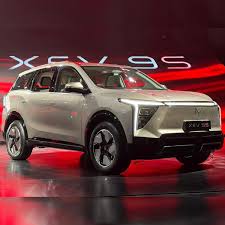
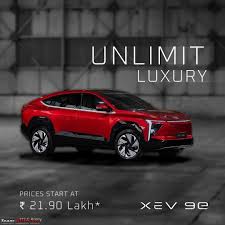
The Tata Safari EV is set to launch in India by the festive season of 2026. As Tata’s new flagship electric offering and first three-row EV, the Safari EV will rival the likes of the Mahindra XEV 9S. CarzSpa
For buyers who have been waiting for an electric alternative to the diesel Tata Safari, the XUV700, or the Alcazar — this is the car worth understanding completely before making any purchase decision.
Why the Safari EV Is a Landmark Product for India
The Tata Safari has been one of India’s most iconic SUV nameplates for over two decades. The modern Safari — launched in 2021 on the OMEGA Arc platform — elevated the nameplate to genuine premium territory with its 33.05 out of 34 Global NCAP score, premium interior, and powerful diesel automatic.
The Safari EV takes this foundation and adds electric drivetrain technology — creating what will be India’s first genuinely practical three-row family electric SUV at a price that does not require a luxury car budget.
The Safari EV will sit at the top of Tata’s EV lineup and will be Tata’s first three-row electric vehicle. It will be based on the same Gen 2 acti.ev+ architecture that the Harrier EV also rides on. Quora
Expected Launch Timeline
The Safari EV is expected to launch around the festive season of 2026 — likely in the Dhanteras-Diwali months of October to November 2026. Production is expected to begin around August 2026. Quora
The Tata Safari EV price is expected to start at around ₹22.5 lakh to ₹26 lakh ex-showroom — though multiple sources suggest the range could extend to ₹30 lakh for top AWD variants. CarzSpa
The timing is strategic — Tata will likely space the Safari EV launch after the Sierra EV, giving each product its own market moment. The festive season launch window is ideal for a premium product targeting aspirational buyers.
Platform and Architecture
The Safari EV will be based on Tata’s acti.ev+ architecture — essentially an ICE platform adapted for electric use. This approach allows Tata to bring the model to market faster while keeping costs in check. Quora
This is the same platform underpinning the Harrier EV — Tata’s approach of adapting the proven OMEGA Arc platform for electric use has been validated by the Harrier EV’s reception. The Safari EV’s body-on-platform construction will be familiar to existing Safari owners while delivering a new electric drivetrain experience.
The use of this platform also means the Safari EV retains the structural strength that gave the ICE Safari and Harrier their world-class safety ratings. The body shell integrity — proven in Global NCAP testing — carries over to the electric version.
Battery, Range, and Performance
The Safari EV is expected to use 65 kWh and 75 kWh battery packs. A rear-wheel-drive setup will likely be standard, while a dual-motor all-wheel-drive option could be offered with the larger battery. The Harrier EV currently delivers a claimed range of up to 627 km, but since the Safari is larger and heavier, its range could be slightly lower. Quora
Expected range figures:
- 65 kWh RWD: approximately 480 to 530 km MIDC claimed | 380 to 420 km real-world
- 75 kWh AWD: approximately 520 to 580 km MIDC claimed | 420 to 470 km real-world
Combined output in AWD versions could reach 300 to 400 hp, allowing 0 to 100 kmph acceleration in under 7 seconds. Fast DC charging support of up to 150 kW is expected, enabling a 20 to 80 percent charge in around 30 minutes. Autoblog
30 minutes for 20 to 80 percent on a 75 kWh battery is genuinely impressive — it means a highway pit stop of roughly the time it takes for a coffee and a quick stretch is enough to add 300 km of range. For a family road trip SUV, this charging speed makes the Safari EV genuinely practical on Indian highways where Tata’s fast charging network continues to expand.
Design — Bold Safari Character Meets EV Refinement
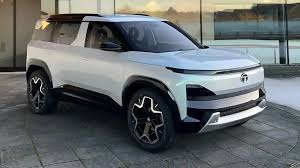
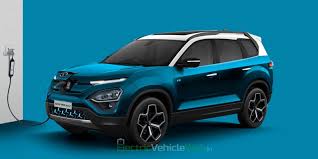
Design changes will likely be minimal. Expect a closed-off grille, new bumpers, EV-specific alloy wheels, and subtle badging. Inside, the layout should remain similar to the current Safari, but with added tech features. Quora
The closed-off front grille — replacing the ICE Safari’s open grille — is the signature EV design element. Aerodynamic alloy wheels improve efficiency without sacrificing the Safari’s commanding road presence. The overall silhouette — that tall, commanding, distinctly Safari stance — remains intact. This is not a dramatic redesign but a thoughtful evolution that preserves what Safari buyers love about the current car’s appearance.
The Safari’s exterior dimensions of 4,668 mm length give it genuine large SUV road presence — significantly larger than three-row compact SUVs like the Alcazar or XUV700 base variants.
Interior — Premium Three-Row Family Space
The Safari EV interior is expected to offer high-quality materials, soft-touch surfaces, leatherette upholstery, and ambient lighting. The focus is on combining seven-seat practicality with the benefits of electric mobility. Autoblog
Expected interior features:
- 12.3-inch touchscreen infotainment with wireless Android Auto and Apple CarPlay
- 10.25-inch or larger fully digital instrument cluster
- 540-degree camera system (upgraded from current 360-degree)
- Panoramic sunroof
- Ventilated front and rear seats
- Dual-zone automatic climate control
- Wireless charging
- Level 2 ADAS suite
- OTA (Over the Air) software updates via Tata’s TiDAL architecture
- V2L (Vehicle to Load) capability expected on higher variants
The three-row configuration will be similar to the ICE Safari — genuinely adult-usable second row with captain or bench options, and a usable third row for shorter adults and children on medium-length trips.
The electric drivetrain’s flat floor advantage — no transmission tunnel — could improve cabin spaciousness compared to the ICE version, though the battery pack placement means the full benefit varies by row.
Safety — World-Class Foundation
The ICE Safari already holds the highest Global NCAP score ever recorded for an Indian car — 33.05 out of 34 points. The Safari EV builds on this foundation with the same structural integrity.
Safety is expected to be a major focus with multiple airbags, electronic stability control, and Level 2 ADAS on higher trims. Autoblog
Expected safety equipment:
- 7 airbags (including driver knee airbag)
- ABS with EBD
- Electronic Stability Control
- Hill Hold and Hill Descent Control
- Level 2 ADAS — Autonomous Emergency Braking, Lane Keep Assist, Adaptive Cruise Control, Blind Spot Detection
- 540-degree camera
- ISOFIX child seat anchors
- Tyre Pressure Monitoring
The AWD version adds traction advantage on slippery surfaces — genuinely useful for Indian monsoon conditions and occasional light off-road use that Safari buyers often demand.
Expected Price and Variants
Production is expected to begin around August 2026, with prices likely starting around ₹26 to ₹30 lakh ex-showroom. Quora
The expected starting price of the Tata Safari EV is likely to be around ₹22.5 lakh to ₹26 lakh ex-showroom for the base RWD variant, going up to ₹30 lakh for the top AWD variant. CarzSpa
Estimated variant structure:
- Base RWD 65 kWh: ₹22.5 lakh to ₹25 lakh
- Mid RWD 65 kWh: ₹25 lakh to ₹27 lakh
- Top AWD 75 kWh: ₹28 lakh to ₹32 lakh
At these price points, the Safari EV would be significantly cheaper than any imported three-row electric SUV available in India — making it the only genuinely practical and affordable seven-seat electric option for Indian families.
Rivals — What It Competes Against
Mahindra XEV 9S (expected ₹21 lakh to ₹30 lakh): The most direct rival — Mahindra’s three-row electric SUV. The XEV 9S versus Safari EV battle will be the defining premium electric SUV comparison of late 2026. Both are homegrown, both target premium Indian families, and both offer three-row practicality with long range and AWD options.
Tata Harrier EV (₹21.49 lakh to ₹25.90 lakh): The Safari EV sits above the Harrier EV in Tata’s own lineup — offering three rows versus the Harrier’s five seats. For buyers who specifically need the third row, the Safari EV is the logical step up.
MG Hector Plus Electric (if launched): The Hector Plus in petrol six-seater form is a competitor — an electric version would be a rival.
Imported alternatives: The BYD eMax 7, Kia EV9 in lower trims — these international three-row electric SUVs exist at significantly higher price points (₹35 lakh plus). The Safari EV undercuts them dramatically.
The Real Running Cost Advantage
This is the strongest argument for the Safari EV for buyers currently running an ICE Safari or similar large diesel SUV.
A family covering 2,000 km monthly in a diesel Safari at 12 kmpl real-world pays approximately:
- Monthly diesel cost (at ₹90/litre): approximately ₹15,000
- Annual diesel cost: approximately ₹1,80,000
The same family in a Safari EV with home charging at ₹7 per unit at 5 km per unit:
- Monthly electricity cost: approximately ₹2,800
- Annual electricity cost: approximately ₹33,600
Annual saving: approximately ₹1,46,400
Over five years that is ₹7.32 lakh saved on fuel alone — a significant portion of the Safari EV’s purchase price recovered purely through running cost savings.
Should You Wait for the Safari EV?
Wait if:
- You are currently in the market for a large, seven-seat premium SUV
- Your purchase timeline extends to October or November 2026
- You want electric mobility without the compromises of smaller EVs
- Running cost savings over five years are important to your financial planning
- You trust Tata’s EV ownership ecosystem — Ziptron technology, warranty, service network
Do not wait if:
- You need a car within 3 to 4 months
- The Harrier EV or XUV700 petrol adequately meets your 5-seat needs
- You live in an area with limited EV charging infrastructure and no home charging access
- Budget is closer to ₹15 to ₹20 lakh — the Safari EV’s pricing starts meaningfully above this
Final Assessment
The Tata Safari EV is genuinely exciting for a specific type of Indian buyer — the family that needs seven seats, wants premium comfort and world-class safety, and has been reluctant to make the EV switch because no practical three-row electric option existed at a reasonable price.
That gap is about to be closed. The Safari’s platform proven safety, Tata’s expanding EV ecosystem, an expected 500-plus km real-world range, and pricing that starts below ₹26 lakh combine to create something genuinely new for the Indian market.
Watch for the official launch in October to November 2026. Confirmed pricing and final specifications will make the decision clear.
Also read: Tata Harrier EV Review 2026 and Best Electric Cars Under ₹30 Lakh India 2026.
External source: Autocar India — Tata Safari EV